
IT and Marketing: The Dynamic Partnership That Makes All Other Partnerships Possible
In the world of digital marketing, success isn’t just about flashy campaigns or social media influencers. The real game-changer lies in the technology that powers these initiatives. In 2023, the global marketing technology (martech) market was valued at a staggering $670 billion; a 31% increase from 2022. This trend has continued and expanded in 2024, with the revenue alone amounting to $0.48 trillion. This shows just how essential the partnership between IT and marketing has become for modern businesses.
Marketers rely on tools like artificial intelligence (AI), customer data platforms (CDPs), and marketing automation to craft data-driven campaigns. Such tools not only improve efficiency but also enable a more personalized approach to reaching customers. The growing investment in martech is proof that the merger of IT and marketing isn’t optional—it’s necessary.
However, the partnership between IT and marketing isn’t just about adopting new tools. It’s about enhancing collaboration to ensure both teams achieve shared goals. IT professionals provide the infrastructure and expertise that drive campaigns, while marketers use this foundation to deliver creative and impactful strategies.
Together, they form a dynamic duo that powers business success.
Why IT and Marketing Need Each Other
Marketing no longer exists in isolation. Technology plays a key role in almost every marketing aspect, from data collection to campaign execution. IT professionals ensure that marketers have access to reliable platforms, secure systems, and data-driven insights. For example, IT teams set up CDPs that allow marketers to analyze the customer journey, track user behavior, and create targeted campaigns.
Moreover, IT teams are instrumental in integrating marketing automation tools. These tools streamline repetitive tasks such as email scheduling, lead nurturing, and social media posting. Automating these processes, marketers can focus on strategy and creativity rather than administrative work.
Marketing’s Dependence on IT
On the other hand, marketers rely on IT to implement and manage the technology stack. From maintaining CRM systems to securing customer data, IT ensures the smooth operation of marketing technologies. This dependency has grown with the rise of advanced tools like AI-driven analytics and machine learning. These technologies help marketers predict trends, optimize campaigns, and make data-backed decisions.
For instance, CDPs are crucial in today’s nearly cookieless world. They provide a unified view of customer data, enabling marketers to understand their audience better and create personalized experiences. IT’s role in deploying and maintaining these platforms makes such innovation possible.
Tools Driving the IT-Marketing Collaboration
Several tools and technologies have emerged as the backbone of the IT-marketing partnership. Let’s explore some of the most impactful ones:
Customer Data Platforms (CDPs)
CDPs are central to modern marketing strategies. They collect, analyze, and utilize customer data to deliver personalized experiences. A survey of U.S. martech professionals in 2023 highlighted enhanced reporting, better measurement, and a clearer understanding of the customer journey as the top benefits of CDPs.
With the help of machine learning, CDPs also provide advanced insights that can shape future campaigns. IT teams play a critical role in deploying and optimizing these platforms, ensuring marketers can access real-time, actionable data.
Marketing Automation
Automation tools are a game-changer for efficiency. In 2023, marketing automation software generated $5.4 billion in revenue. By 2030, this figure is expected to surpass $10 billion globally. In 2023, marketing automation software generated $5.4 billion in revenue. By 2030, this figure is expected to surpass $10 billion globally.
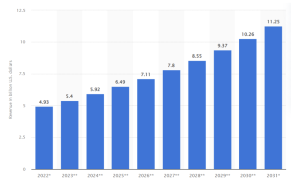
Source: Statista
Email marketing remains the most automated channel, but tools also handle tasks like lead scoring, social media scheduling, and customer segmentation. IT ensures these systems integrate seamlessly with existing infrastructure, enabling marketers to scale their efforts without sacrificing quality.
AI and Machine Learning
AI has transformed marketing by enabling smarter decision-making. From chatbots to predictive analytics, AI tools help marketers understand customer behavior, forecast trends, and optimize campaigns. IT teams play a crucial role in selecting, deploying, and maintaining these systems to ensure they deliver value.
Platforms like Slack, Asana, and Trello improve communication and collaboration between IT and marketing teams. These tools streamline project management, enhance transparency, and ensure both teams stay aligned.
Benefits of IT-Marketing Collaboration
Improved Efficiency
With IT’s support, marketers can automate repetitive tasks, analyze data faster, and launch campaigns more efficiently. This not only saves time but also reduces operational costs.
Enhanced Customer Experience
Collaboration enables personalized marketing, which is key to customer satisfaction. IT ensures marketers have access to accurate data, while marketing teams use this information to tailor their messages.
Stronger Data Security
Data breaches can be catastrophic for any business. IT teams protect sensitive customer information, ensuring compliance with regulations and building trust with audiences.
Greater ROI
When IT and marketing work together, campaigns are more targeted and effective. This leads to higher returns on investment and better resource allocation.
How to Create IT-Marketing Collaboration
Regular Communication
Set up regular meetings between IT and marketing teams to discuss goals, challenges, and opportunities. Clear communication ensures both teams are on the same page.
Shared Goals
Align objectives to ensure IT and marketing are working toward the same outcomes. For instance, if the goal is to improve lead generation, both teams can collaborate on optimizing CRM systems and campaign strategies.
Training and Education
Provide cross-training opportunities so that IT professionals understand marketing concepts and marketers grasp basic technology principles. This mutual understanding leads to better collaboration.
Use of Collaborative Tools
Invest in tools that facilitate communication and project management. Shared platforms can help both teams track progress, resolve issues, and stay aligned.
The Future of IT-Marketing Partnerships
As technology continues to evolve, the partnership between IT and marketing will only grow stronger. Innovations like generative AI and augmented reality are already reshaping marketing strategies. IT’s role in implementing these technologies will be essential for staying competitive.
Moreover, the rise of data-driven marketing means IT and marketing teams must work closely to collect, analyze, and utilize information. Businesses that prioritize this collaboration will be better positioned to adapt to changing consumer behaviors and industry trends. Are your IT and marketing teams ready to unlock their full potential? Strengthen this critical partnership today by leveraging advanced tools, improving collaboration, and aligning goals.
Visit Cooperate Marketing to explore how our team of expert IT-marketing professionals can help your company achieve outstanding results!
Get your free checkup
Learn moreGet your free check up today!
Send us a note to learn a little bit more about our co-marketing solutions. Our exclusive multi-point assessment of your current program includes real, actionable steps you can take to improve its performance.